· 4 min read
Why you answer blind: the rule that makes answers honest
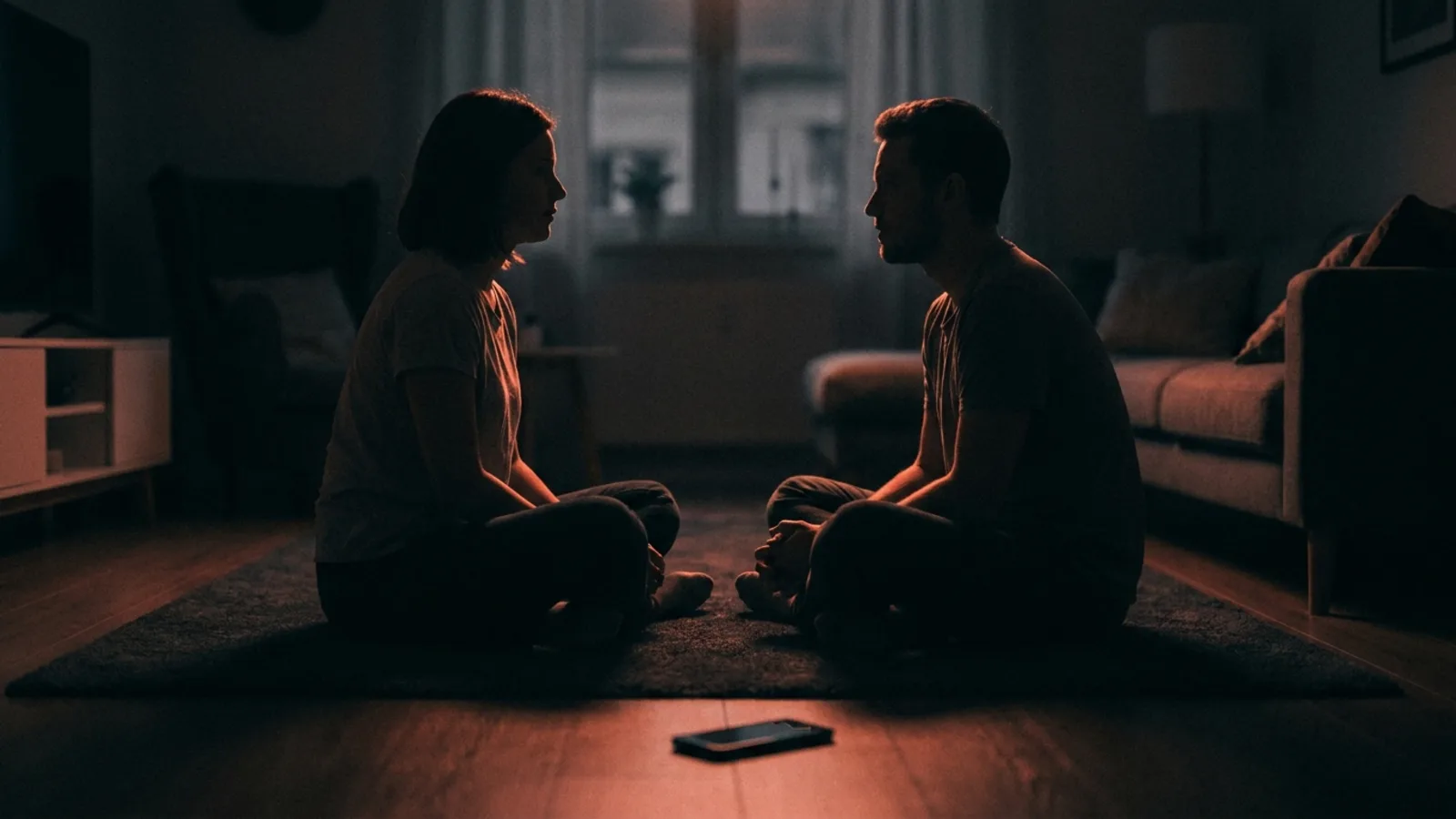
Neither partner sees the other's answer until both are in. It sounds like a small mechanic. It is the difference between honesty and performance.

In Duoheart both partners answer the same five questions separately, and neither of you sees anything until both of you have answered. Then everything unlocks at the same moment. This is the single rule we would keep if we had to delete every other feature.
The first version did not work
Our first build was the obvious one. You answered, your partner saw it, they answered back. Simple, familiar, and it took about a week to see what was wrong with it.
The second person is not answering the question any more. They are answering the first answer. If your partner wrote something warm, writing something plain feels cold, so you warm yours up. If they wrote something long, three lines feels dismissive. If they said the thing you were about to say, you go find a different thing to say, which means the truest answer you had gets quietly discarded for being a duplicate.
None of that is dishonesty exactly. It is ordinary social instinct, the same reflex that makes people agree with whoever spoke first in a meeting. But it means the second answer is not really information about the person who wrote it, and the first person can feel that. "You are just saying that" is hard to argue with when the timing makes it true.
What blind answering removes
When you cannot see anything, there is nobody to write toward. You are alone with the question and your own answer, which is the only condition under which the answer is actually yours.
Order stops mattering too. Whoever answers first is not setting a tone, and whoever answers second is not responding to one. Both answers were formed independently, and both of you know it when they appear. That knowledge is doing a lot of quiet work. When two independent answers turn out to match, it means something, because neither of you could have copied. When they do not match, that is real information rather than an argument about who conceded.
The moment you can see the other answer forming, you start writing toward it. Blind answering takes away the audience.
The unlock is the point
We spent a surprising amount of time on the moment answers appear. It happens for both of you at once, all five at a time, with no partial peeking and no notification that says what your partner wrote before you have finished writing.
Simultaneity is not decoration. If one partner could see even a little early, the whole guarantee is gone, and everyone would go back to writing for an audience. The value of the rule depends on both of you trusting it completely, so it has to hold with no exceptions.
There is also something good in the shape of the evening. There is a gap: you answer, then you wait. During the wait you are still thinking about the question, sometimes for hours. Then it all arrives at once and you read your partner in a batch, five answers deep, which is a different experience from reading one message. It feels less like a chat and more like being handed a page from someone's notebook.
Why the questions are phrased the way they are
This rule dictates the grammar of every question in the app, which is a detail nobody notices until it is broken.
Because both of you answer the same question separately, a question cannot be phrased as if one partner were asking the other. "What do I do that makes you feel loved?" falls apart the moment both people answer it, because the "I" means a different person in each copy. So every question in Duoheart addresses you in the second person and refers to your partner in the third: "What small thing does your partner do that makes you feel loved?" That version works from both sides at once, and it means the two answers are actually about the same thing and can be read side by side.
We hold that rule in all sixteen languages, which is more work than it sounds like, because some languages want to slide back into the intimate first person and have to be pulled out of it.
The one thing it asks of you
The answers are not the end. Each one opens into its own private thread, so the interesting part usually starts after you have read what your partner wrote. That is where the actual conversation happens, and it has no rules, no timer and no structure. The blind answering exists to get two honest things on the table. What you do with them afterwards is yours.
Blind answering only works if you write the answer you actually have, including the boring one and the one you are not proud of. Nobody is watching while you write, which removes the excuse for performing, but it does not remove the temptation. The app can guarantee that your partner did not influence your answer. It cannot guarantee that you were honest with yourself.
That part is still on you. The design just makes it as easy as we know how to make it.
Questions people ask
- What if my partner never answers?
- Nothing unlocks until both answers are in, so the set stays sealed. Your own answer is saved and waiting.
- Can I edit my answer after I submit it?
- The point is that answers are formed independently, so once both are in they appear as written. You can always add anything more in the thread underneath.
- Why are questions always about my partner rather than about me?
- Because both of you answer the same question separately. Phrasing it about your partner in the third person is what lets the two answers be read side by side.