· 3 min read
Screenshots and trust: the thing no protocol can fix
Every private conversation has a participant who can copy it. Encryption cannot help with that, and it is worth talking about explicitly.
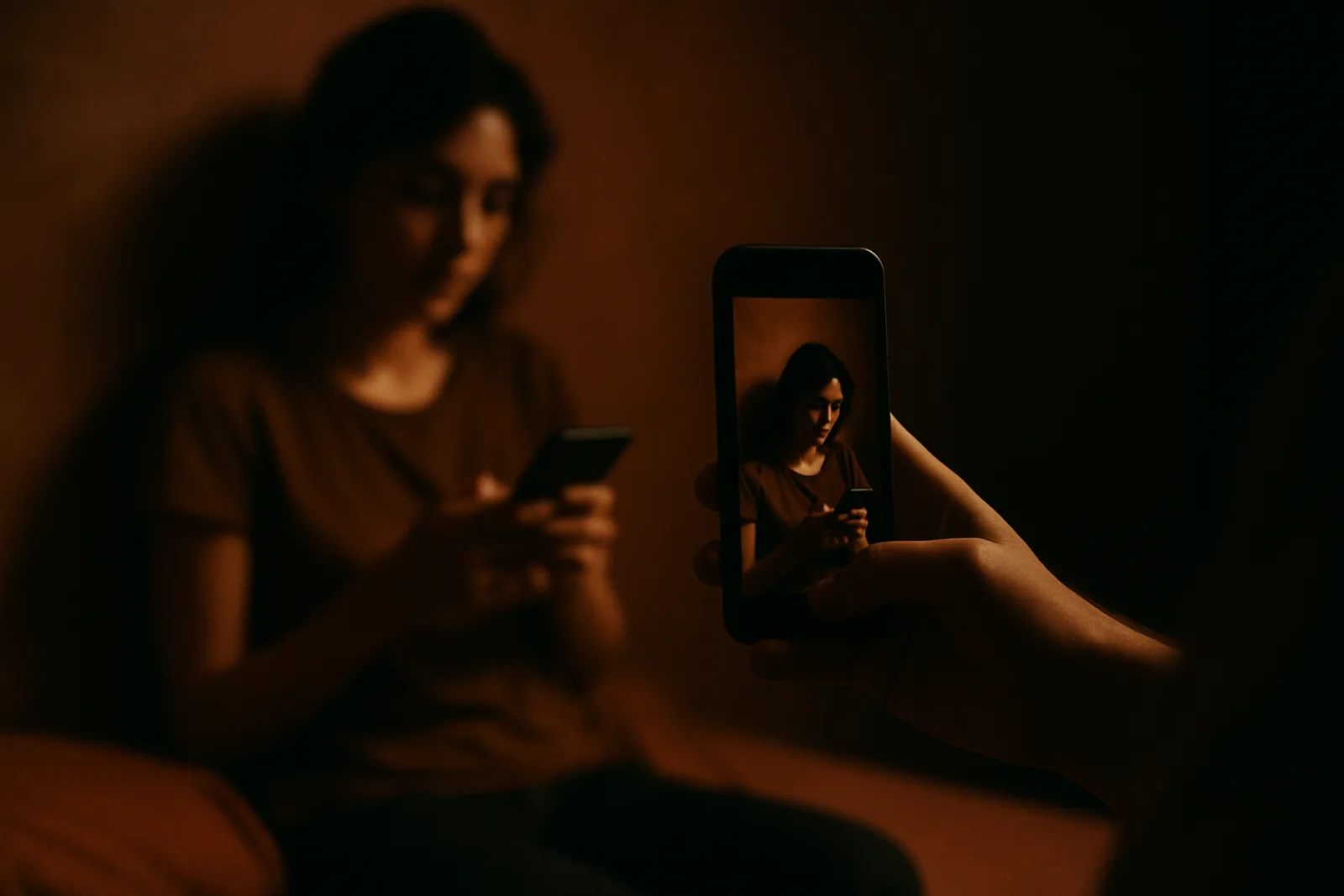
No encryption scheme protects you from the person you are talking to. This is not a flaw in the design, it is the boundary of what the design can do.
Anything you say to someone can be repeated, quoted, forwarded or photographed. That was true of letters and it is true of everything since.
The specific modern difference
Repetition used to be lossy. Someone told a friend what you said, badly, from memory, and the friend understood that it was a report.
A screenshot is not a report. It is an artefact, apparently complete, apparently neutral, and it travels.
It also detaches a sentence from its context in a way that is nearly impossible to repair. A line that made sense inside a nine minute exchange, said at eleven at night, after a long day, becomes a self-contained statement of character when it is on its own in someone else's chat.
A screenshot is a sentence with the room removed.
Why couples do it
Mostly not maliciously. Three common versions.
Seeking a second opinion. "Am I being unreasonable?" This is usually genuine and it is also the moment a private exchange becomes a third person's business permanently.
Building a record during a conflict, particularly where one person has been told they said something they do not remember saying.
And sharing something affectionate, which people rarely think of as a disclosure and which puts the same material in the same places.
The cost that is not obvious
The immediate cost, if it is discovered, is the obvious one.
The larger cost is what it does to the person who did it. Having an audience changes how you write. Someone who habitually shows messages to a friend begins, without deciding to, composing for that friend: sharper, more quotable, better positioned. The conversation with their partner stops being a conversation and becomes partly a performance.
Worth agreeing explicitly
Very few couples ever discuss this and most have different assumptions.
The conversation is short. What is shareable, with whom, in what form. Most people land somewhere like: the fact of a disagreement can be discussed with one or two people, the text of it does not leave.
It is also worth agreeing what happens with a third party who is already involved, because in practice a friend who has read six months of screenshots has a stake and an opinion and is not neutral when things improve.
After it has happened
If your messages have been shared without your agreement, the useful conversation is not about the screenshot. It is about what the person needed that they went elsewhere for.
That is not an excuse for it. It is where the actual problem usually is, and the alternative is a household where both people now write carefully.
What a product can and cannot do
Some apps detect or block screenshots. These measures are weak: another phone photographs the screen, and the detection can usually be worked around.
We do not pretend otherwise. Duoheart encrypts content on the devices so that we cannot read it, and that protects you from us, from an attacker on our systems and from anyone in between. It cannot protect you from the person you are writing to, and no product can.
What design can do is reduce the incentive. Much of what gets screenshotted comes out of real-time argument in messaging apps: quotable, badly worded, sent under pressure. A format where both people write separately and nothing is a reaction to anything produces far less material that anyone wants to forward.
The underlying point
Privacy between two people is ultimately not a technical property. It is an agreement, and it is worth having explicitly rather than assuming.
Questions people ask
- Can an app stop my partner screenshotting our messages?
- Not reliably. Detection can be worked around and another phone can photograph the screen. No protocol protects you from the person you are talking to.
- Is it wrong to show a friend messages from my partner?
- It depends on an agreement most couples have never made. It is worth discussing explicitly, because assumptions about this differ widely.
- What should I do if my partner shared our private messages?
- Address what they were seeking outside the relationship as well as the act itself. The sharing is usually a symptom of needing an audience for something unresolved.