· 3 min read
Phones out of the bedroom, and what comes back
The last twenty minutes of the day used to be where couples said the unplanned thing. Here is what replaced it, and what happens when you take it back.
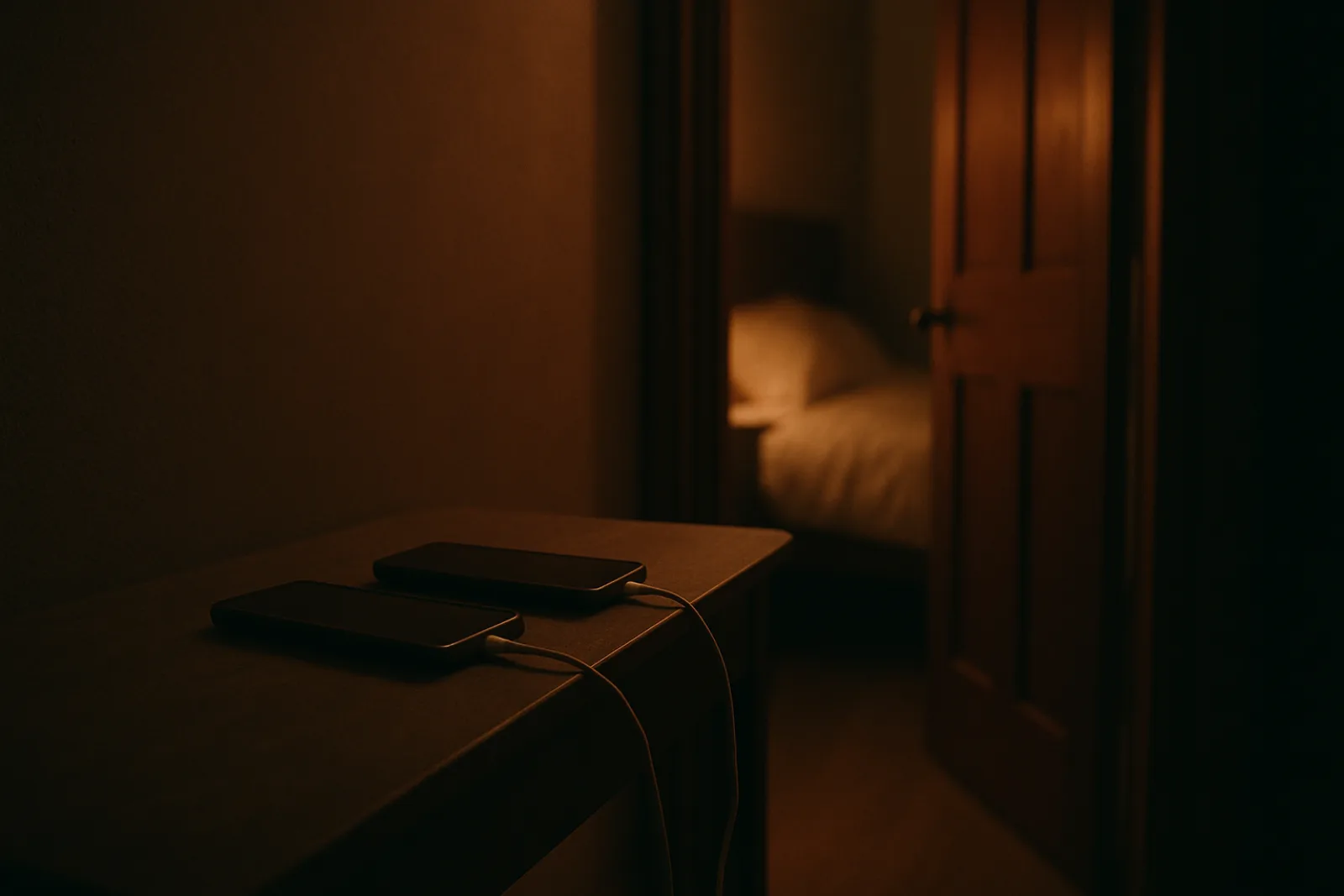
Of all the small changes couples can make, this is the one with the largest ratio of effect to effort, and the one most likely to be dismissed as obvious.
It is worth being specific about what is actually lost, because "phones are bad" is not an argument anybody acts on.
What the last twenty minutes used to do
The period between getting into bed and falling asleep has unusual properties. It is unstructured, it is dark, nobody is doing anything else, and there is no natural end that forces a conclusion.
That combination is why so much of what couples say to each other that matters has historically been said there. Not planned conversations. The unplanned thing: the worry that had not been formed into a sentence yet, the admission, the question you would not have asked with the lights on.
Replace it with two people on separate screens and that category of exchange does not move somewhere else. It simply stops happening.
Nobody decided to stop having those conversations. The slot was occupied by something else.
The second effect, which is smaller but real
Phubbing, the term for attending to a phone while a partner is talking, is consistently associated with lower relationship satisfaction in the research.
The mechanism is not mysterious. Every time attention visibly goes elsewhere mid-sentence, a small signal is sent about relative priority. Individually trivial, and they accumulate.
What actually happens when you remove them
Couples who try this usually report the same sequence.
The first two or three nights are uncomfortable and slightly boring. Both people notice how strong the reflex to reach for something is.
Within a week or so, conversation returns, and it is not the conversation they expected. The first things that come back are small and slightly odd: half-formed thoughts, observations about nothing.
Within a few weeks, the larger things follow, because the small ones re-established that the slot exists.
Many couples also report better sleep, which is a separate and well-documented effect of removing light and stimulation before bed.
Making it actually happen
The alarm clock is the whole barrier. Almost everyone uses the phone as an alarm and that single fact keeps it on the bedside table. Buy a clock. It costs very little and it removes the excuse entirely.
Charge phones in another room, not face down on the table. Anything within reach will be reached for.
Agree an exception list rather than pretending there will be none: on call, family emergency, a child away. Rules with no exceptions get broken once and then abandoned.
And do it together. One person banning phones while the other scrolls produces a much worse outcome than both keeping them.
If the bedroom is not available
Small flats, shared rooms, night workers. The principle is about the slot rather than the room.
Pick another twenty minutes that is reliably yours and protect it the same way. The properties that matter are that it is unstructured, that nothing else is happening, and that it does not have a hard end.
Replacing it with something rather than nothing
Some couples find the empty slot difficult at first, particularly if they have been avoiding each other's company without admitting it.
Having something small to do in it helps for the first few weeks. A few questions, answered separately on paper or on a phone that then goes away, and read together. Duoheart takes about the right amount of time for this and is designed to end rather than continue, which is the opposite of everything else that would otherwise occupy those twenty minutes.
Questions people ask
- Does keeping phones out of the bedroom improve relationships?
- It reliably restores a slot where unplanned conversation used to happen, and it removes the repeated small signal that attention is elsewhere.
- What is phubbing?
- Attending to a phone while a partner is talking. It is consistently associated with lower relationship satisfaction, mostly through the accumulation of small signals about priority.
- How do we manage without our phones as alarms?
- Buy an actual alarm clock. It is the single barrier that keeps phones on bedside tables and it costs very little to remove.