· 4 min read
One Sentence a Day: Thirty-One Years of Marriage
After thirty-one years, Anu and Rein started leaving each other one written sentence a day. It changed what they were able to say out loud.
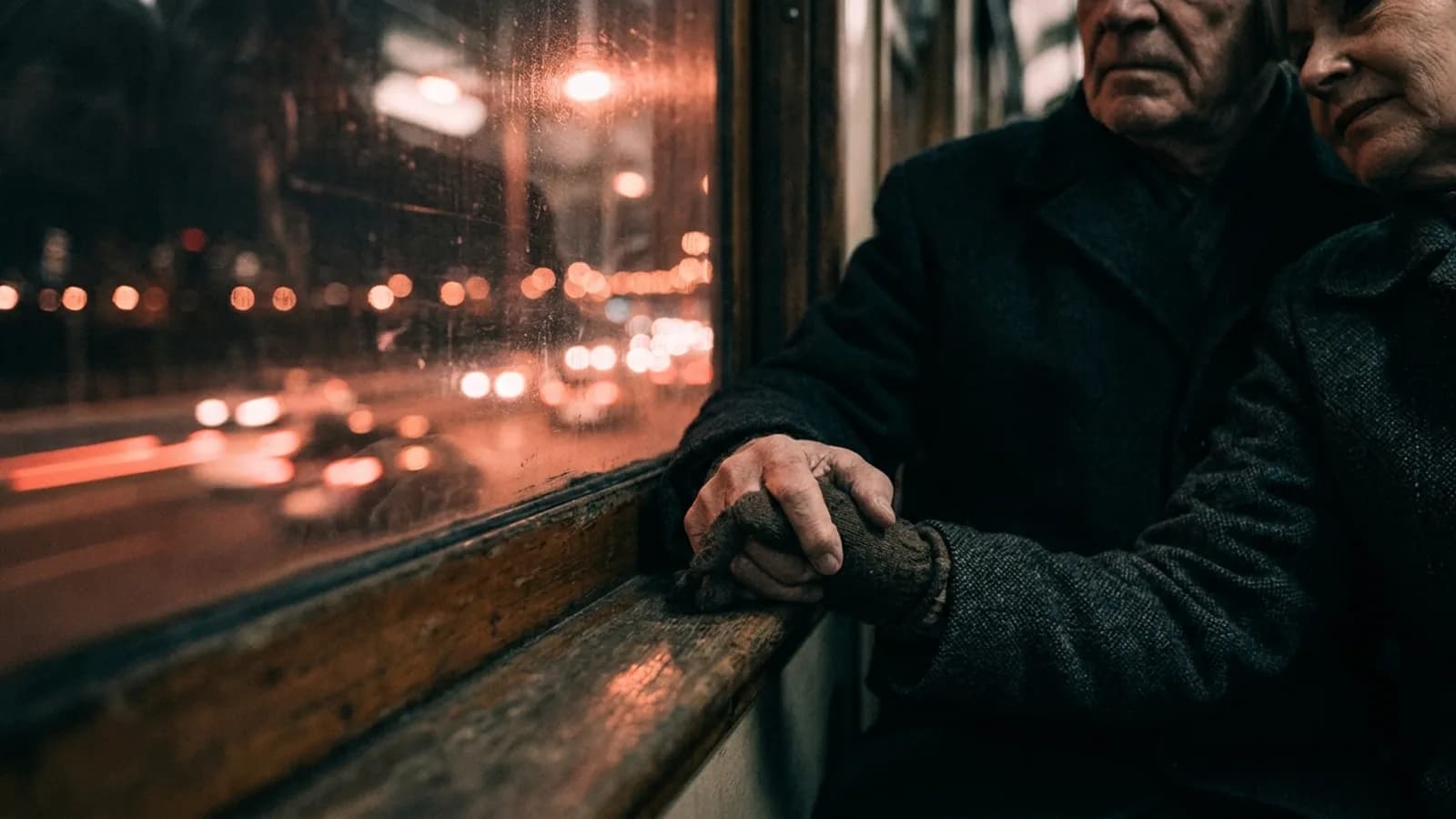
Anu bought the notebook because it was the cheapest thing on the shelf and she needed coins for the bus. A6, soft cover, squared paper, the sort schoolchildren use for arithmetic. That was in March, and by March she and Rein had been married thirty-one years, which is long enough that a marriage stops being something you discuss and becomes a room you live in without noticing the walls.
What made her buy it was a Tuesday. She had asked how his day was and he had said fine, and she had said hers was fine too, and both of them had been telling the truth in the way that truth can be a blanket you throw over a room so you do not have to look at what is in it. His mother had been moved into care in January. Anu's knee had begun to hurt in a way that suggested it would not stop.
So she wrote one sentence in the notebook and left it on the kitchen table next to the bread board. 'Today I was afraid I am becoming a person who does not ask twice.'
Rein found it at half past six, still in his coat. He read it standing up. Then he sat down and wrote underneath, in the handwriting she had been reading on birthday cards since 1995: 'Today I did not tell you that I sat in the car outside Mother's window for twenty minutes before I drove home.'
The rule they made without meaning to
Neither of them proposed a system. It arrived the way household habits arrive, by repetition. One sentence each, per day. No replies inside the notebook. No corrections, no advice, no explaining what you meant. It had to be about that day and not about the general condition of their lives.
The brevity turned out to be the whole engine. Given a page, Anu would have written something reasonable and slightly performed. Given one line, she had to decide what the day had actually been. Rein, who had spent forty years in a job where the correct answer was the shortest one, found the format easier than talking, which surprised them both.
A sentence is short enough that you have to choose what matters. A conversation is long enough that you can hide inside it.
Some entries were ordinary and stayed ordinary. 'Today the blackcurrant bushes needed cutting and I did not cut them.' 'Today the bus was warm and I fell asleep past my stop.' On days when nothing surfaced, the agreed entry was 'Nothing today,' and that happened perhaps twice a month, and nobody died of it.
What three decades does to a question
In the first years they had asked each other questions constantly, mostly because they did not yet know the answers. Where did you go on holiday as a child. What frightens you about your father. Do you want a garden.
Then the answers were known and the questions became logistics. Did you call the plumber. Is the car booked in. Are we going to your sister at Easter or ours. Logistics are not a failure of love. They are how two people keep a life standing up. But if they are the only questions in the house, a person can go a long time without being asked anything that requires them to think before answering.
The notebook put the other kind of question back, sideways, without either of them having to be brave in front of the other's face.
In May, Rein wrote: 'Today I understood that I have been angry with you about the apartment since 2019 and I have never said the year out loud.'
Anu read it, put the kettle on, and did not answer. She wrote her own sentence about the rain. Two days later, at breakfast, she said one word: '2019?' And he told her, in ordinary morning light, with toast in his hand, about a decision they had made together in which he had gone along with her and then spent six years quietly filing the receipt.
It was not a scene. There was no shouting and no long night of it. It took about eleven minutes, and afterwards he went to work.
Why writing gets there when talking does not
Talking is fast. Fast is where defenses live. You hear the first half of a sentence, predict the second half, and start assembling your reply while your partner is still speaking. Thirty-one years of practice makes that prediction very good, and very often slightly wrong.
Writing removes the interruption. There is no face to read, no tone to flinch at, no chance to soften something into nothing halfway through. The person writing gets to finish. The person reading gets to have their first reaction privately, which is usually the reaction they are least proud of and most in need of a minute with.
There was one more thing, which they only noticed later. Anu always wrote her sentence before she read his. Not by design, just because she woke earlier. That meant her entry was never a response to his mood. It was her own day, unedited by his. Duoheart works on the same principle in a phone, with both partners answering before either can read, but the mechanism is older than any app and costs about two euros at a supermarket.
If you want to try it, start smaller than feels worthwhile. One sentence, written where the other person will find it, about today and not about the marriage. Do not answer it. Do not thank them for it. Let it sit for a day, and see what you find yourself asking at breakfast on Thursday.
Anu still has the first notebook. It is the fourth one now. The blackcurrant bushes did eventually get cut, in June, by both of them, badly.
Names and details changed; the couple is a composite.
Questions people ask
- What should the first sentence be about?
- Something specific from that day, not a summary of the relationship. A small fear, a small pleasure, or a thing you noticed and did not mention.
- Should you reply to what your partner writes?
- Not in writing. Let it sit, and if it matters it will come up in conversation later, when the heat has gone out of it.