· 3 min read
Non-sexual touch, and what happens when it disappears
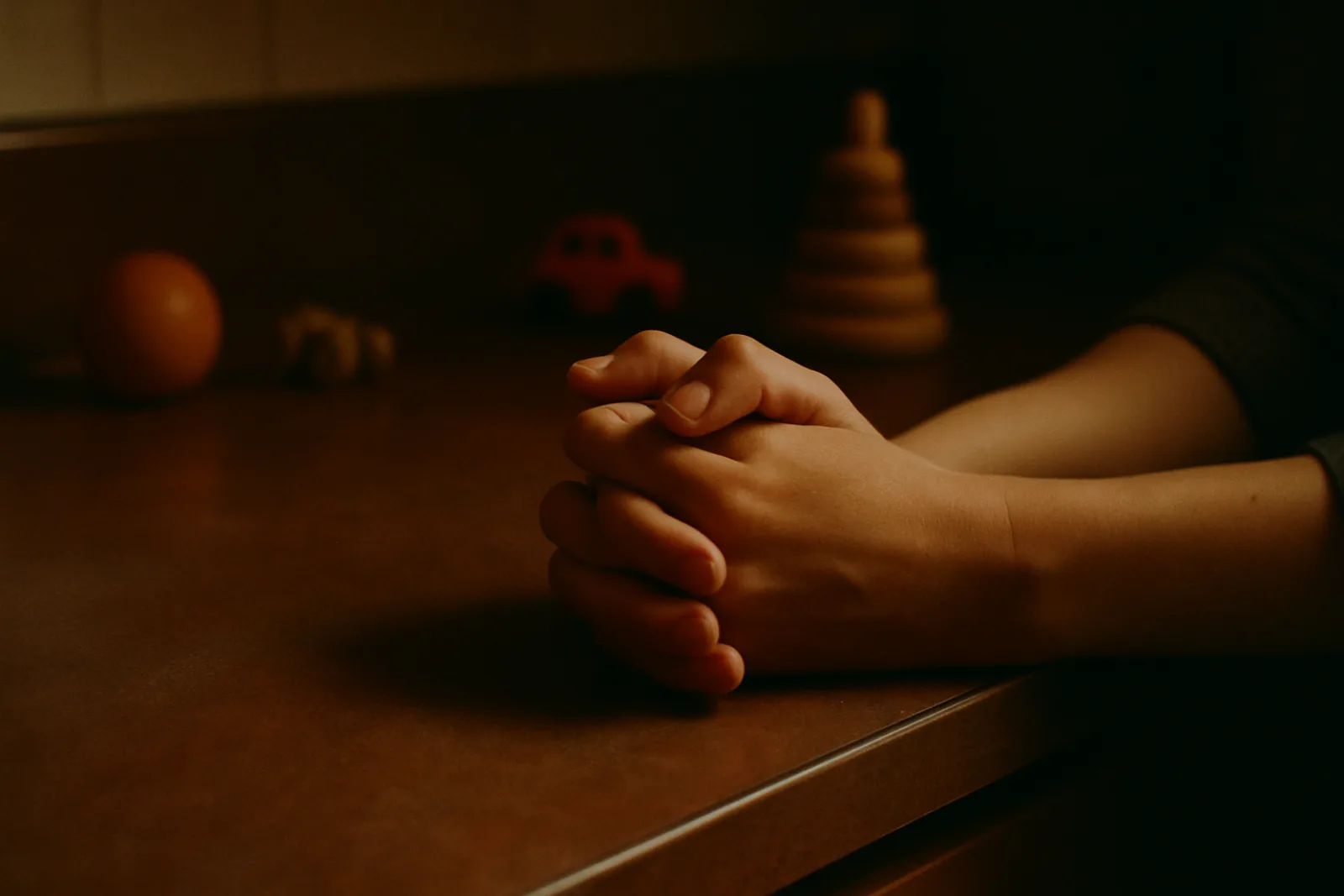
Casual physical contact is the background layer of a relationship. When it becomes exclusively a prelude, couples lose more than they realise.

In most long relationships touch narrows over time. It does not disappear so much as specialise: a hand on a back becomes a signal, a hug in the kitchen becomes an opening move, and everything else quietly stops.
Couples rarely notice the narrowing while it happens. They notice the result, which is a household where two people who love each other barely make contact.
Why casual touch matters
It is the cheapest form of acknowledgement available. A hand on a shoulder while walking past a chair takes half a second and says that you noticed someone was there.
It maintains physical familiarity. Couples who go months with no casual contact find that deliberate contact becomes awkward, because the body has become unfamiliar. This is a real and reversible effect and it surprises people.
And it is regulatory. Sustained contact lowers physiological arousal, which is why holding someone during a difficult conversation works better than the same conversation across a table.
When every touch is a proposal, the answer to most touches becomes no, and then there are almost no touches.
How it narrows
Usually through one mechanism. In couples with a desire mismatch, the lower-desire partner begins avoiding contact to avoid having to refuse. The higher-desire partner, sensing the withdrawal, reduces casual touch as well, either from hurt or from an attempt not to pressure.
Both people believe they are being considerate. The result is a household with no physical contact at all.
Children accelerate it for a different reason. A parent who has been climbed on all day is frequently touched out, and the last thing they want in the evening is another body against them. This is physiological rather than emotional, and it is worth saying out loud rather than letting it be interpreted.
Rebuilding it
Separate touch from intent explicitly. This has to be said, once, in words: that you would like to be able to touch each other without it being a question.
Then keep to it. Touch that leads somewhere every time reinstates the original problem within a fortnight.
Use anchors rather than intentions. "More affection" fails. Specific moments succeed: contact on leaving and arriving, sitting where you are touching rather than at either end of the sofa, a hand while one of you is driving.
Start shorter than feels natural. Couples who have been out of practice often find extended contact uncomfortable at first, and treating that as evidence of a deeper problem is a mistake. It is unfamiliarity.
Different appetites for touch
People vary enormously in how much contact they want, and the variation is independent of affection. Someone raised in a family that did not touch is not colder, they are unpractised, and they often find sustained contact genuinely effortful.
The workable version is not for the high-touch partner to reduce their need or the low-touch partner to fake comfort. It is to name the difference and find the specific forms that work for both, which are often narrower and more particular than either expected.
Touch during difficulty
The most valuable use and the one most couples abandon first. During an argument, most people withdraw physically at exactly the moment contact would help.
Some couples agree in advance that during a hard conversation they sit next to each other rather than opposite, or that one of them can ask for a hand without it meaning the argument is over. Both are small and both change how conflict feels.
The ordinary version
None of this requires planning or discussion once it is established. It requires the narrowing to be reversed deliberately once, and then maintained.
The couples who keep it are usually the ones who kept talking about ordinary things at the same time. Physical and conversational contact tend to decline together and recover together, which is why a small daily habit of saying what is actually going on tends to show up in the physical layer too. Duoheart is one way to hold that, in a few minutes a day, with both of you answering before either can read.
Questions people ask
- Why has my partner stopped touching me?
- Most often because touch has become exclusively a prelude, so declining touch is the only way to decline the rest. Separating the two explicitly usually reverses it.
- What does touched out mean?
- A physiological state, common in parents of small children, where the body has reached its limit for contact. It is not an emotional withdrawal and is best stated plainly rather than left to interpretation.
- How do we rebuild physical affection after a long gap?
- Agree out loud that touch is not a proposal, then use specific anchors such as arrivals, departures and sitting closer, starting shorter than feels natural.