· 3 min read
Learning Each Other's Language, Badly, For Nine Years
He speaks Estonian, she speaks Portuguese, they argue in English. What they found was that the third language changed what could be said at all.
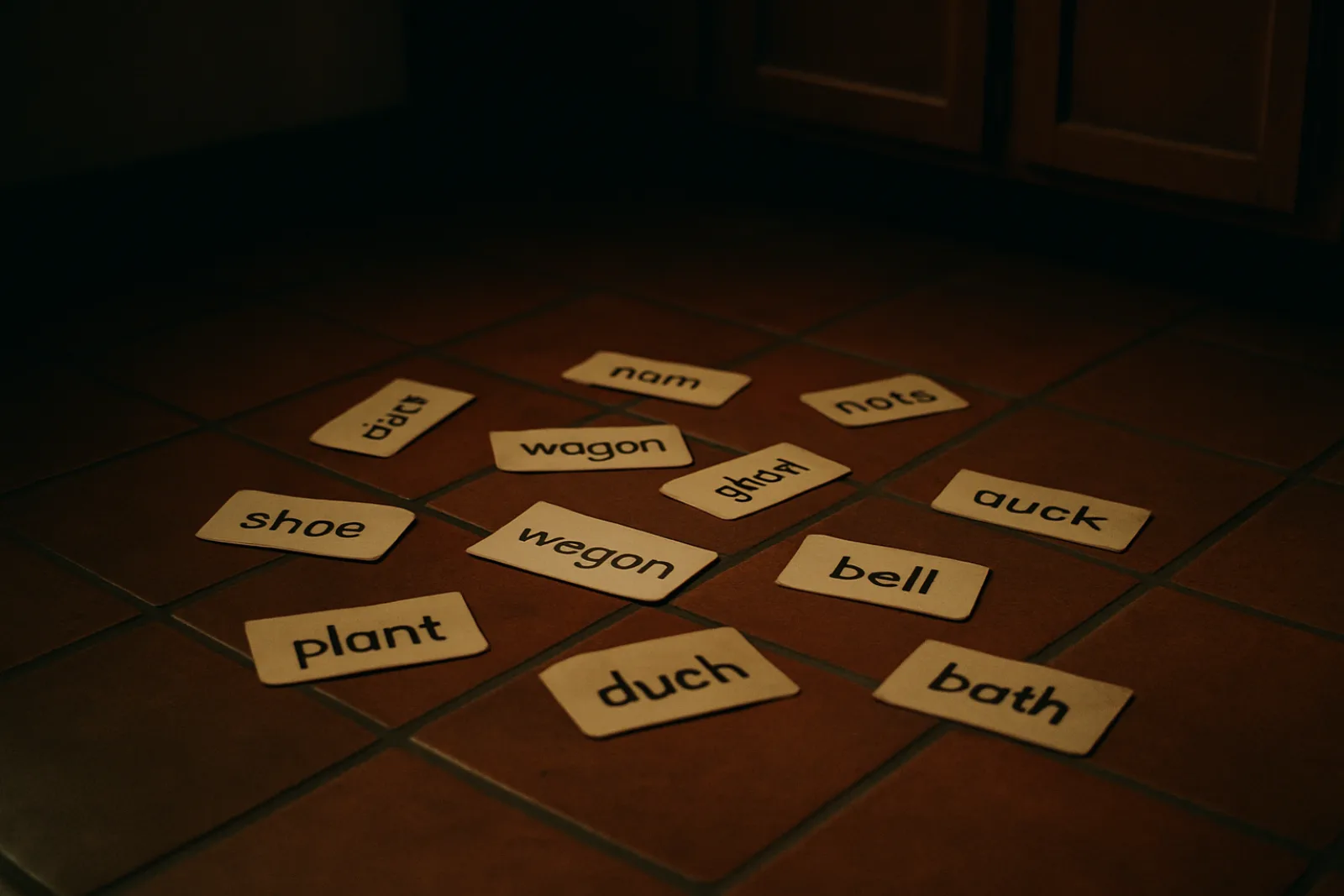
They met in a third country, in a third language, which neither of them spoke well at the time and both of them speak well now. Nine years, one child, and a household in which three languages are in use on any given evening.
The thing they both say first, when asked, is that English made the early years easier and the middle years harder.
Why it was easier
In a second language, difficult things are lighter. This is documented and both of them recognised it immediately when they read about it.
They had conversations in year two that they now think they would not have managed in their own languages. Money. His father. Whether either of them wanted children. She says the English versions of those conversations were almost businesslike, and that the businesslike quality was exactly what made them possible.
He puts it differently. He says that in Estonian he would have had to mean it.
The distance that makes a second language easier to argue in also makes it harder to be moved in.
Why it got harder
Around year four she noticed that she had never heard him say anything tender that sounded like him.
He was affectionate in English and he was affectionate in a way that she eventually realised was translated: correct, slightly formal, assembled. She had been receiving a version of him that had been through a process.
The same was true in reverse and he had not noticed at all, because the fluent partner rarely does.
The experiment
They started, awkwardly, saying specific things only in their own languages. Not whole conversations. Phrases.
She says the first time he said something to her in Estonian that she did not understand, and then refused to translate it, was more affecting than anything he had said in five years of English.
He learned about forty words of Portuguese, badly, mostly the small ones. She says his accent is beyond repair and that this is not the point.
The argument problem
This is the part they are less romantic about.
In English, they are not equally matched. She is faster, and she has more precision at the edges: the softeners, the qualifiers, the way to say something is a bit difficult rather than difficult.
For years this meant that in any disagreement she arrived first and better, and he conceded more often than he agreed, which is a distinction he could not articulate at the time and can now.
The fix was procedural and unglamorous. Either of them can stop a conversation to think, and it is not treated as evasion. And anything important gets written.
Writing as the leveller
They started writing things down in year six, initially for practical reasons around a family decision, then as a habit.
He says the reason it mattered is that writing gave him the same thing she had: time to choose the word. In speech he had ten seconds and took the nearest word. In writing he had four minutes and took the right one.
She says she discovered he was considerably funnier than she had realised.
They now use a format where the same question goes to both of them, each answers separately in whichever language they like, and neither sees the other until both have written. She answers in Portuguese about half the time and he reads it with a translation and says the translated version of her is more like her than the English one ever was.
What they say to other couples
Do not assume the fluent one is the accurate one.
Notice which of you is always slightly behind in an argument, and change the format rather than the content.
And keep some things in your own language, even if the other person does not understand them, particularly the small ones. She says the words their daughter uses for food and sleep are Portuguese, and that he uses them too now, badly, and that this is what a shared language actually looks like: not one of them winning.
Names and details changed; the couple is a composite.
Questions people ask
- Is it harder to be in a relationship in a second language?
- Some things become easier, because a second language carries less emotional weight, and some become harder, particularly tenderness and the fine control needed to soften a statement.
- Why does my partner sound different in their own language?
- Because a second language is assembled rather than spoken. Fluent speakers still lose register and the small words, which is where most personality lives.
- How do mixed language couples argue fairly?
- By allowing either person to pause to think without it counting as evasion, and by putting important things in writing so the slower speaker has equal precision.