· 3 min read
Why arguing over text goes wrong so reliably
Text removes tone, adds delay and creates a permanent record. That combination turns small disagreements into long ones. Here is what to do instead.
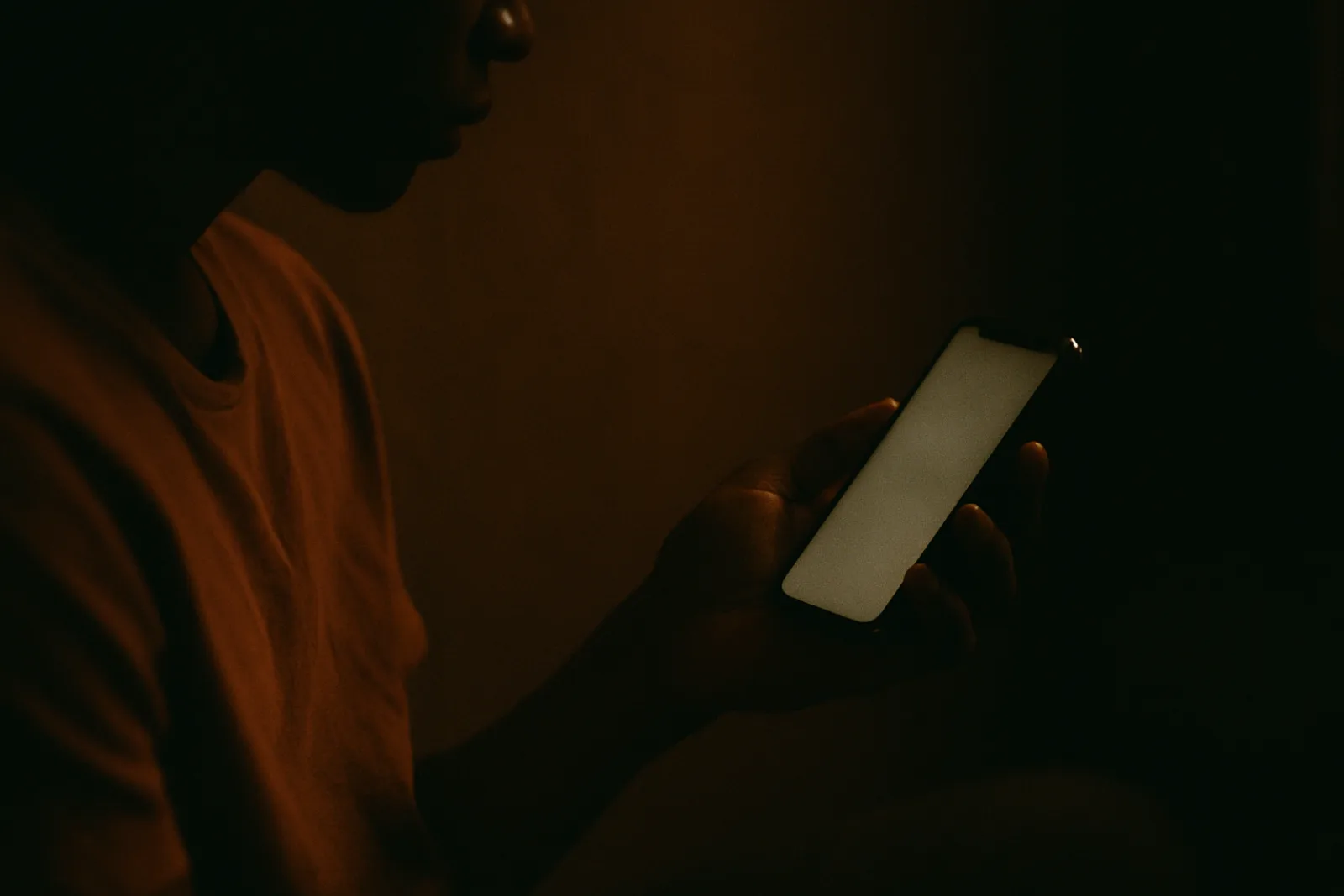
Nearly every couple has had the argument that started as a two-line message and ended, three hours later, with both people furious about something neither of them had intended to say.
Text is not a bad medium in general. It is a specifically bad medium for conflict, and for reasons that are structural rather than personal.
What text removes
Tone. The largest share of meaning in a spoken sentence is carried by how it is said, and text carries none of it. "Fine." has at least six meanings in speech and one in writing, which is the worst one.
Interruption. In conversation you can stop a misunderstanding within two seconds. In text you watch it form, send your correction, and it arrives after they have already replied to the version they read.
Repair signals. A softening face, a shift in posture, a hand. All of the small non-verbal repair attempts are unavailable, so escalation has nothing to slow it down.
In speech a misunderstanding lasts two seconds. In text it lasts as long as it takes both of you to type.
What text adds
Delay, which the brain fills in with the worst available interpretation. Ninety seconds of no reply is experienced as an answer.
A permanent record, which changes the incentives entirely. People write differently when they know the sentence can be produced later, and worse, it makes the exchange re-readable. Nobody re-reads a conversation they had in a kitchen. Everyone re-reads a thread at two in the morning.
An audience of one that is always available. A conflict that would have waited until evening now starts at eleven in the morning, in a work toilet, with neither person able to finish it.
And the read receipt, which has probably caused more unnecessary conflict than any other feature ever shipped.
The rule that fixes most of it
Text is for logistics and warmth. Anything with a feeling in it waits.
Practically: when you notice a thread turning, send one sentence that stops it. "I want to talk about this properly, not here. Tonight?" Then do not send anything else, including the clarification you badly want to add.
That last part is the discipline. The urge to get one more message in, to make sure your position is at least recorded, is what converts a paused argument into a continued one.
When you are apart and there is no alternative
Long distance couples and people travelling for work do not get to postpone everything until they are in a room.
Voice notes are substantially better than text, because tone returns. Most of the misreading disappears immediately.
If it has to be written, write more rather than less. The instinct under stress is to get shorter, and short messages read as cold. Two extra sentences of context cost nothing and prevent most of the damage.
And state the feeling explicitly, because it cannot be inferred. "I am not angry, I am worried" is information the medium cannot otherwise transmit.
The record problem, specifically
Do not quote old messages back. It is the text equivalent of bringing up history in an argument, with the added weight of being incontestable.
And be careful about the screenshot, particularly sending one to a friend. Once a private exchange has been shown to a third party, something has changed that is difficult to reverse, and it tends to be discovered eventually.
A better default channel
Part of why conflict ends up in text is that it is the only private written channel most couples have, and it is optimised for immediacy: instant delivery, visible typing, read receipts, pressure to respond.
A slower written channel behaves completely differently. When both people write before either can read, there is no typing indicator to react to, no half-formed reply to answer, and no advantage to being fastest. That is how Duoheart works, and it is why couples describe it as the opposite experience to arguing in a messaging app, even though both are text on a screen.
Questions people ask
- Why do arguments over text escalate so fast?
- Because tone is missing, delays get filled in with the worst interpretation, and neither person can interrupt a misunderstanding before it is fully formed.
- What should I do when a text argument starts?
- Send one message postponing it to a specific time, then stop typing entirely. Adding a clarification after is what restarts it.
- Are voice notes better than text for disagreements?
- Considerably, because tone returns and most misreading disappears. They are the best available option when you cannot have the conversation in person.