· 3 min read
After the Diagnosis: The First Year Nobody Warns You About
The illness was hers. What neither of them expected was what it did to the shape of the marriage, and how long that took to reverse.
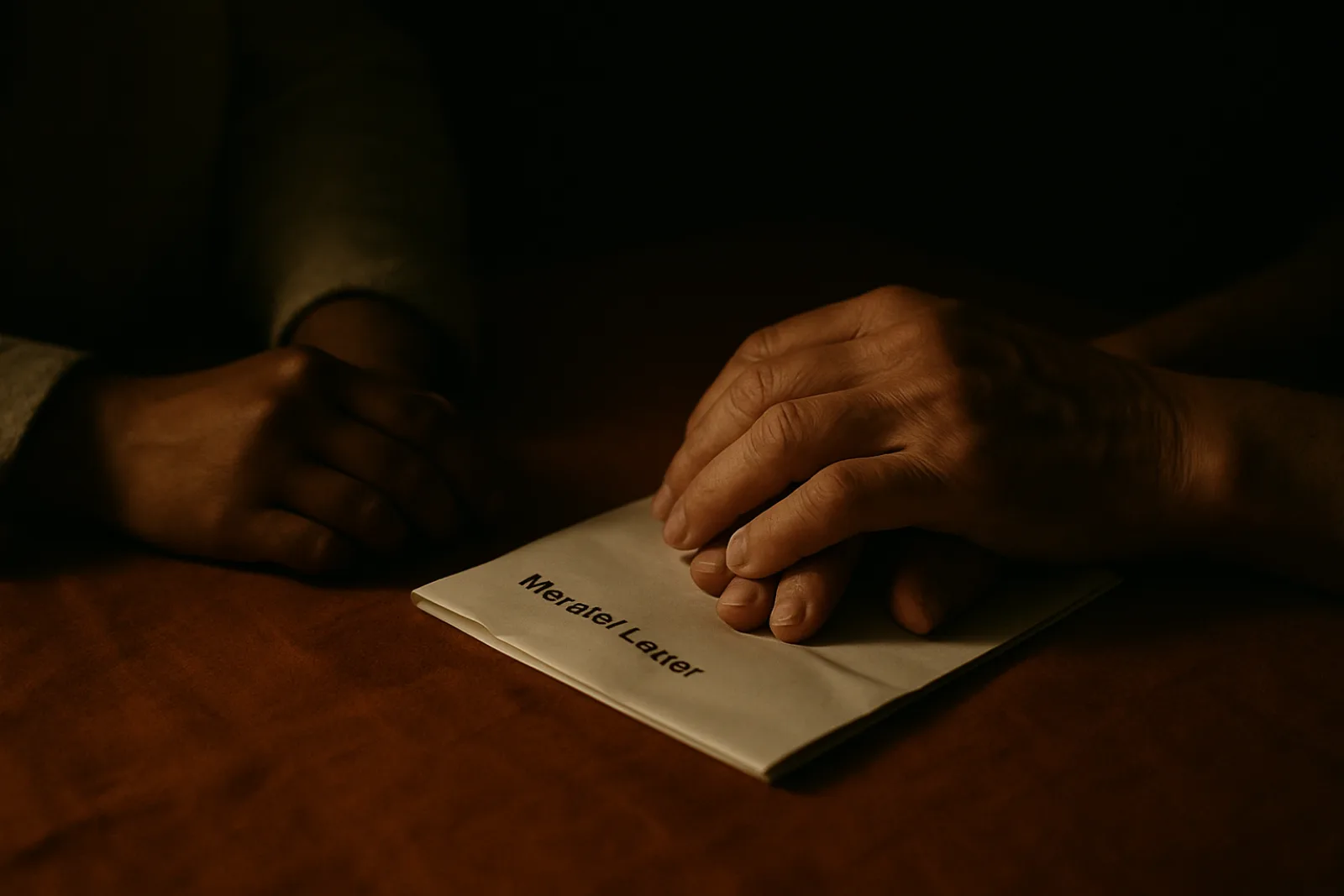
The diagnosis came in October and the treatment ran to the following August, and both of them will tell you that the difficult year was the one after that.
During
During, there is a schedule. Appointments, cycles, results. Everyone is busy and everyone knows what their job is, which is a form of relief that neither of them would have predicted.
He became extremely competent. He drove, he kept the notes, he dealt with the insurance, he learned to recognise the days. She says he was magnificent and that she started to find it unbearable somewhere around the fifth month, and that she did not say so for two years.
What was unbearable was not the competence. It was that she had become a thing being managed, and that she could see, in the way he looked at her in the mornings, that he was assessing.
He was checking on her constantly and it was entirely loving and it made her feel like a patient in her own kitchen.
After
The treatment ended and everyone else went back to normal, which both of them say is the part nobody warns you about.
He could not stop checking. He was not consciously doing it and he did it every morning and continued to do it for about eighteen months.
She could not stop being checked on. She began, in small ways, concealing tiredness, which she describes now as the worst thing she did in the whole period, because it meant that when something real happened two years later she had already trained herself not to mention it.
And neither of them had any way to raise it. The illness had used up the household's entire capacity for difficult conversations.
The thing that shifted it
It was not a conversation. It was a question on a phone, which she thinks is slightly absurd and is what happened.
Their daughter had put an app on both their phones the previous Christmas, the kind that sends both people the same question and does not let either see the other until both have written. They had used it sporadically and mostly forgotten it.
In the March, the question was something like: what do you wish the other person would stop doing.
She wrote that she wished he would stop asking how she was in the mornings.
He wrote that he wished she would tell him when she was tired instead of pretending.
Both answers appeared at the same time, which is the part she emphasises. Neither of them had to go first. Neither of them had spent the evening working up to it. And each of them had written something that, read alone, would have been devastating, and that read alongside the other was obviously the same problem seen from two sides.
The year after that
It did not resolve in an evening. He says stopping the morning question took months and that he replaced it with looking at her carefully, which she caught him doing and which they now treat as a joke.
What did change immediately was that it became possible to talk about it at all. She says the app did not fix anything. It located the thing.
What they say now
He says that in the whole year of treatment, nobody at any point asked what it was doing to the marriage. Everyone asked about her and several people asked how he was coping, which is a different question, and none of it touched the actual problem, which was that two people had swapped roles and had no procedure for swapping back.
She says the thing she would tell other couples is to keep something that is not about the illness. Anything. A question with no medical content, asked regularly, so that there remains one place in the week where nobody is a patient and nobody is a carer.
They still answer the questions most evenings. She says the content is mostly trivial and that the triviality is the whole value.
Names and details changed; the couple is a composite.
Questions people ask
- Why is the year after treatment often the hardest for a couple?
- Because the schedule that organised everyone disappears while the roles do not. Carer and patient behaviour often continues long after it is needed.
- How do couples move out of the carer and patient roles?
- By naming the pattern explicitly. Most couples cannot raise it because the illness has consumed the household's capacity for difficult conversations.
- What helps a relationship during long illness?
- Keeping one regular exchange with no medical content in it, so that there is somewhere in the week where neither person is defined by the illness.